The Job of Supervisor, and How I’ll Do It

The Job of Supervisor, and How I’ll Do It 

Most residents don’t think much about what the Town Supervisor does, and when the job is done well, it’s seamless. The roads get paved, the budget is balanced, taxes are predictable, and people know what’s planned for their neighborhood before it arrives. But the Supervisor is the town’s chief executive and chief financial officer, and the decisions made in that office touch every household in Yorktown.

Doing that job well takes planning, discipline, and a willingness to listen before deciding. I’ve built those skills over 35 years in small business and finance, and through leadership roles across our community. That’s what I would bring to Town Hall on day one.

Here is what that would look like.

First, I will put the town on a five-year financial plan with clear, regular reporting, so you can plan your household budget the way the town should plan its own. Residents deserve steady, predictable budgets, not a large tax increase one year, a zero increase the next, and fee hikes to make up the difference.  Department heads will be accountable for their budgets, and so will I.

Second, I will work with the Comprehensive Plan Committee to move that project along, ensure the final result reflects what residents actually want, and then execute on that plan. That means the right projects in the right locations, including affordable and middle-market housing for our teachers, police officers, nurses, town employees, and young families, not just luxury homes.

Third, I will run an open Town Hall. Residents should be able to see how decisions are made and have a real voice before they are made, not after.

I’m running on the Community First independent party line because local government should be about local issues. Fixing a road or balancing a budget isn’t a partisan question, and I will work with anyone on the Board who puts residents first.

Early voting has started and runs through Sunday, November 1. Election Day is Tuesday, November 3. 

There is work to do. And I’m ready to get to work.
Competence, Not Chaos: Ethics Shouldn’t Depend on Who’s Paying Attention

A recent opinion piece by Councilman Murphy, “Public safety deserves facts, not fear,” takes issue with an article I wrote. What stands out is what it doesn’t do. It doesn’t dispute a single fact I raised. Instead, it offers “not excuses” for the decisions behind them.

In his retelling of the “years of history” of the Underhill Farms project, Mr. Murphy leaves out one fact readers should know: his brother serves as a consultant on that project. As a citizen, he has every right to speak. As an elected official, he has an ethical obligation to disclose that relationship and to step back from votes involving the project.

He hasn’t done that consistently. He cast votes on multiple resolutions tied to Underhill Farms, including one authorizing payments to the developer. On the Route 118 and Underhill Avenue intersection project, he recused himself from four resolutions in May 2025, then voted yes on a budget transfer for the same project two months later. This past March, he seconded and voted on a resolution tied to the same consulting relationship, and recused himself only after a fellow Board member objected on the record.

Titling a piece “facts, not fear” while leaving out the fact most relevant to the reader is misleading. And recusing oneself only after being called out in public isn’t accountability or transparency. 

In 2024, this Board amended Yorktown’s Code of Ethics. The code includes a formal definition of recusal. So the problem isn’t that the rules are unclear. The rules are written down. They just aren’t being applied regularly.

And people are noticing. If there is one thing I hear more than anything else when I am knocking on doors, it’s that people are tired of the Old Boys’ Network. Residents have spoken out at Town Board meetings about how they see one set of standards being applied to developers and another for residents.

An executive who doesn’t execute

My opponent likes to describe himself as the Town’s executive. But the title comes with a job, and the job is making sure the basics happen every time.

Consistently applying the rules for recusals is one of those basics. Either the Supervisor didn’t notice, or he noticed and ignored it. Neither is what residents should expect from the person in charge.

That’s the difference between holding a title and doing the job. When the process breaks down, and the person in charge says nothing, that isn’t leadership. It’s chaos.

What competence looks like

The solution requires a Supervisor willing to enforce the standard the Board already put in writing.

First, disclosure up front. Every Board member files, and must keep current, a list of family and business relationships with applicants, consultants, and contractors who come before the Town.

Second, one project, one answer. If a Board member recuses on a project, that recusal covers every resolution tied to it, including budget transfers, payments, and grant applications.

Third, a public record. Every recusal, and the reason for it, needs to be sent to the Clerk in writing, noted in the minutes, and easy for residents to find online.

These are basic steps well-run towns take as routine. They protect residents, they protect the Town, and frankly they protect Board members too.

Yorktown residents shouldn’t have to play detective to catch conflicts of interest themselves. A lone Board member shouldn’t have to argue for the policy to be applied. Good government works only when the rules are applied evenly and consistently, and when leadership ensures they are. That’s the difference between competence and chaos, and it’s the kind of Supervisor I intend to be.

I Pay Attention. Here’s What I See.

I recently shared a post on Facebook highlighting some of the cost-saving and sustainability projects in neighboring municipalities. Croton is pulling in roughly $500,000 a year with solar canopies over the MTA parking lot, and Philipstown wiped out electric bills on three municipal buildings with panels on the highway garage roof. 

The Supervisor commented on the post that the Board sent “it” (a study on solarizing our municipal buildings) to the town’s Climate Smart Community task force and Sustainable Westchester, and that the experts came back saying it wasn’t worth the money. 

He also told me I needed to pay attention. 

I do pay attention. And here’s what I see.

Town board meetings begin slowly with reviews of community events and multiple proclamations, then, more often than not, quickly devolve into barbed back-and-forth between board members. When a resident uses their three minutes at Public Comment to raise something the Supervisor doesn’t want to hear, the response is often condescension rather than an answer. 

Week after week, month after month, a Councilmember asks about the status of a municipal project, and the Supervisor chastises them for not paying attention, or other Board members mock them. 

There is one moment in particular that stays with me. A Girl Scout troop came to a Board meeting to talk about a community project they wanted to do for Yorktown. The students sat in the audience and watched while the conversation at the dais broke down into a 20-minute shouting match. I also sat in the audience, embarrassed by the behavior of those meant to be setting the example for these young women.

There was no call to order. There was no call for decorum. The Supervisor had the gavel, but never used it.

Meetings that run this way don’t just waste an evening. They’re why residents stop showing up, why projects sit for months without answers, and why a development wins approval on the strength of a commitment nobody tracks.

I do pay attention. And what I see is a Town Board that could serve Yorktown far better than it currently does, and residents who are paying the price.

The measure of leadership

A successful leader is able to identify a problem and bring appropriate solutions to bear. One without the other is insufficient.

When I chaired a Task Force for a Board on which I served, we were facing a significant budget shortfall. Two board members had polar opposite views on how to solve it. I made sure they were both on the committee. We worked through options together and found a combination of solutions that closed the shortfall without pricing families out of the programs. We spent the next few months meeting with members to communicate the upcoming changes and how the decision was made. We met face-to-face with those affected by our policy.

Strong leaders invite diverse perspectives, then do the work to turn them into a real answer. They communicate openly and freely; they don’t shy away from difficult conversations. Yorktown’s Town Board could use that same approach.

Successful leaders run effective meetings that include status reports, with timelines and action items. Department heads should give monthly, rotating updates, so every project gets a real answer on a real schedule, and residents don’t wait months to find out what happened to a promise made at a podium. Board members should bring back recommendations from the Advisory Boards they liaise with. The Board should hold respectful, thoughtful discussions of the issues before it. The Supervisor should be able to refocus the discussion when a meeting breaks down. And when a development is approved, the Supervisor should follow up to make sure the promises attached to it are kept. 

Indeed, I do pay attention, and I know Yorktown residents are paying attention as well.

On the Antisemitic Graffiti in Yorktown

Antisemitic vandalism has no place. Anywhere. It’s not just property damage; it’s an attempt to make our Jewish neighbors feel unsafe in their own home. I won’t treat it as anything less.

But hate doesn’t get the last word. Yorktown is bigger than this. A few things we can all do to make the world better, safer, and kinder:

  • Speak up even in small moments — silence reads as neutral.
  • Report incidents so patterns don’t go unseen.
  • Talk to young people about what these symbols mean.
  • Support local civic groups and get involved in organizations that build community ties that hate can’t easily break.

The truest answer to hate is a community that keeps building — openly, and together.

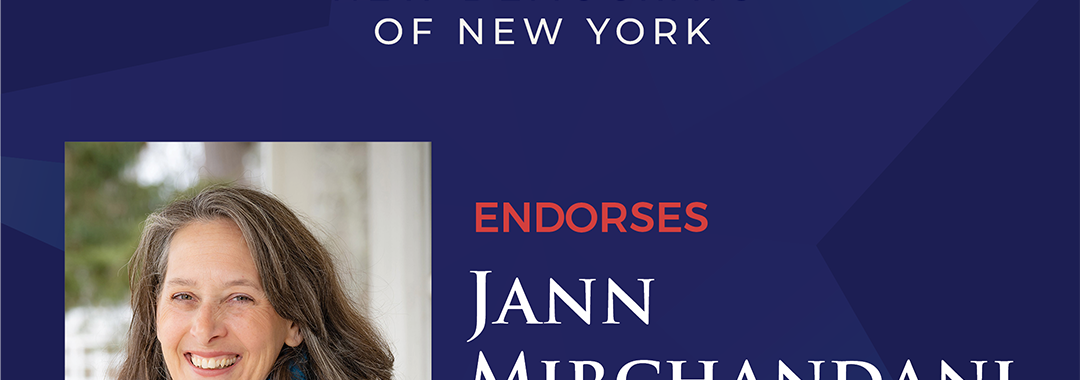
Honored to earn the endorsement of Matt Castelli’s New Democrats of New York!

Local executive offices matter. They shape our communities, determine how our tax dollars are
spent, and oversee the services our families rely on every day.

I’m proud to earn the endorsement of Matt Castelli’s New Democrats of New York as they
continue to support Democrats running for local office who are prepared to deliver common-
sense solutions and effective leadership in local government.

Together, we’re going to keep working to deliver real results for Yorktown
and build a local government that works for everyone.

Lachterman Is Blaming the Victim — a Dog That’s Already Dead

Joint Statement from the Yorktown Democratic Committee and JannMirchandani, Democratic Candidate for Town Supervisor:

YORKTOWN, NY — FOR IMMEDIATE RELEASE — Peter Cleary, Chairman of the Yorktown
Democratic Committee, and Jann Mirchandani, Democratic candidate for Town Supervisor, issued
the following joint statement today regarding Supervisor Ed Lachterman’s public comments on the
shooting death of Luke, a dog belonging to Matt Steele, an unhoused Yorktown resident:
“Yesterday, a retired NYPD officer allegedly shot and killed Luke, a dog belonging to Matt Steele,
an unhoused Yorktown resident, during what may or may not have been a scuffle between two
dogs. The Yorktown Police Department didn’t call it an accident. They charged the shooter, James
Molloy, with aggravated cruelty to animals and reckless endangerment — because, in their own
words, the gunfire ‘created a grave risk of death to others.’

“Supervisor Lachterman described the incident, saying, ‘I think it’s just an unfortunate set of
circumstances where Luke’s leash broke. The other guy had a dog. Luke is part husky, and they’re
alpha dogs. He went over to the other dog and was telling him he was the boss… but I wasn’t
there.’

“In four sentences, Lachterman builds a case — not against the man who pulled a gun, but against
the dog who got shot. He wasn’t there, by his own admission, yet he speaks with total confidence
about Luke’s breed, temperament, and who was ‘acting alpha.’ The one thing he isn’t confident
about is the felony charge sitting in front of him.

“It is highly improper for the town’s top elected official to make any comment — never mind
building a character defense for the man facing felony charges — while an investigation is
ongoing.

“Yorktown doesn’t need a Supervisor willing to spin a tale about what he thinks a dead dog’s
personality might be like to explain away a felony charge. It needs one willing and able to allow the
police to investigate a felony charge without interference.”

The Basics Shouldn’t Be Optional

The most basic responsibility of town government is to keep our roads, parks, and intersections safe for the people who live here. Instead of just posing for press opportunities and catering to developers, walking through Yorktown with an eye for what could go wrong would be a better use of their time- a park without a safe water source, a road too narrow for emergency vehicles to pass, an intersection a firetruck can’t turn through. Being proactive and fixing potential dangers before someone gets hurt should be the focus- not continually running for office.

Granite Knolls: left without the basics

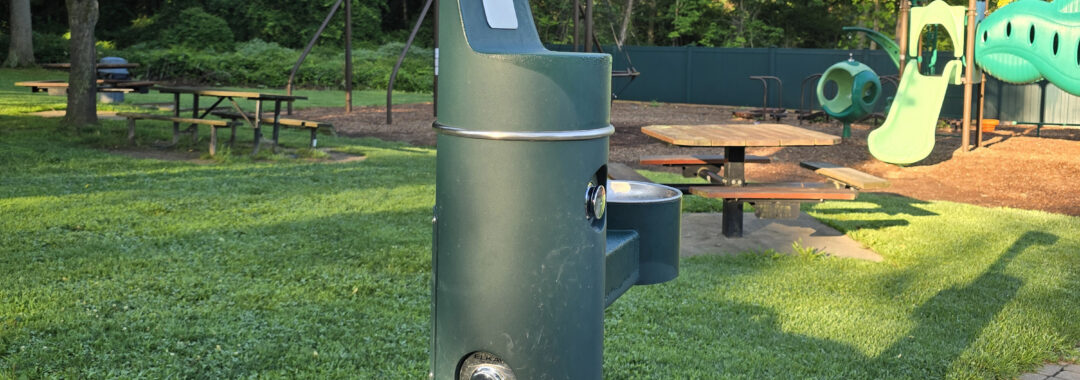
Granite Knolls is one of the most heavily-used parks in Yorktown. It is 15 acres of ball fields, pickleball courts, an inclusive playground, and a walking path. What you won’t find, however, is a single water fountain anywhere on the property. 

During increasingly frequent heat waves with temperatures regularly reaching triple digits for prolonged periods, residents lack easy access to water and return to unshaded cars. According to the National Weather Service, a car’s interior surfaces, dashboards, seats, and steering wheels can reach 180 degrees or more on a hot day, and interior air temperatures can climb well past 140 degrees within an hour. 

There was an effort at one point to add a solar canopy over the parking lot, which would have provided both shade and power. When the project ran into a contractor issue, the Supervisor was asked whether it would move forward with another vendor. His response was that the board was left with a bad taste in their mouths and had no interest in continuing. He went on to adopt the position of a former supervisor, saying he didn’t like the way it looked Given that most of the board has already been vocal in its opposition to ground-mounted solar, this did not come as a surprise. That’s not leadership. That’s letting personal gripes supersede their duty to the town.

A lack of either a drinking fountain or refill station at an outdoor sports complex, with an unshaded and soon-to-be blacktopped parking lot, is a significant hazard. 

We are investing money into a new sand volleyball court, which will be a wonderful addition to the facilities. Responsible risk management should dictate that we also invest in water stations and solar canopies or trees to reduce the risk of heat sickness to patrons.

Underhill Farms: developers first, residents second

The intersection at Underhill Ave. and Rt. 118 has its own problems. The lanes are too narrow for firetrucks, buses, and commercial delivery trucks to make a right-hand turn onto Underhill Ave from Rt 118, and vehicles waiting there have nowhere to go to give oversized vehicles the room they need. For emergency vehicles, every minute lost is a minute that matters.

The building height at Underhill Farms raises its own concern. Beyond the challenge of safely evacuating any building during a fire, the town doesn’t have a bucket truck that can reach the top floors. If there’s ever a fire or emergency on the top floor, residents may have to evacuate down a ladder raised to roughly 40 feet.

The developer got the overlay zoning they needed to build at a higher density, and part of the justification for that change was improved walkability for the surrounding neighborhood. Crosswalks at the intersection were included in the approved plan for exactly that reason. The project is now built and occupied, but two of those crosswalks have left out of the “improved” intersection.

Par 3: an entrance that doesn’t work

The Par 3 golf course opened to much fanfare, and it shows: drive by most evenings and you’ll find a full parking lot with cars spilling onto the narrow service road, leaving inadequate access for emergency vehicles. It’s great to have such a popular destination in town, but popularity without planning has a cost. When you focus on economic development without proactively upgrading infrastructure, you leave residents in a dangerous spot.

The pattern here starts at the top

Taken together, these oversights point to something bigger: a lack of leadership willing to make protecting residents the standard, not an afterthought. Missing crosswalks at Underhill Farms that were part of the approved plan. A scrapped canopy at Granite Knolls. An intersection that can’t handle emergency vehicles and buses. These aren’t accidents. They’re what happens when the person in charge won’t make accountability and infrastructure the baseline for every decision, and everyone below follows suit.

Yorktown residents deserve a town government that treats roads, water, and emergency access as the baseline, not an afterthought. That starts with a Supervisor who puts community first.
Developers have gotten too easy a ride in Yorktown at the cost of resident safety and quality of
life.

Yorktown Supervisor Candidate Jann Mirchandani Qualifies for Independent Party Line and Earns High Profile Endorsements 

FOR IMMEDIATE RELEASE
July 6, 2026
Contact: Tess McRae| tess@theparksidegroup.com

Yorktown Supervisor Candidate Jann Mirchandani Qualifies for Independent Party Line and Earns High Profile Endorsements 

The Democratic Candidate is also Running on the “Community First” Independent Line Despite Attempts by her Opponents to Silence the Voices of Independent Voters

YORKTOWN – Today, Jann Mirchandani is announcing that she has received the required number of signatures to appear on the independent “Community First” party line, in addition to the Democratic Party line, in the race for Yorktown Supervisor. 

Her focus on being an independent voice dedicated to prioritizing fiscal responsibility, common sense housing development, and good governance is resonating with voters and community groups in Yorktown. 

Jann’s opponents attempted to silence the voices of Yorktown’s independent voters by challenging her petitions and attempting to kick her off the ballot. Their challenges were dismissed by the Westchester BOE. 

Additionally, Jann is announcing several endorsements for her campaign, including the Westchester Putnam Central Labor Body, an affiliate of AFL-CIO, as well as Eleanor’s Legacy, and Patriot PAC. 

Jann, the founder of Westchester Marketing Cafe, has over a decade of experience in the financial industry, where she previously worked with international asset management companies. She also has 35 years of experience serving on nonprofit boards, helping organizations dedicated to youth leadership, education and business development. Currently, she is the Vice Board Chair of Operations of the Greater Hudson Valley Council for Boy Scouts of America, where she made history as the first female Council Commissioner, and is a member of the Hudson Valley Gateway Chamber of Commerce and the Business Council of Westchester.

Jann has lived in Yorktown for twenty years with her husband Rajesh. They have two adult children who both graduated from Yorktown High School.

Jann Mirchandani, Candidate for Yorktown Supervisor, said: “I am proud to announce that, thanks to our dedicated volunteers, I will be running on both the Democratic party line and the Community First party line, this November. This news, as well as the endorsements that we are rolling out today, demonstrate what we are feeling here on the ground; that people are ready for new, independent leadership that will focus on good governance and always put the people of Yorktown first.  I am grateful to those who have already come out in support of our campaign, including Eleanor’s Legacy, the Patriot PAC, and the Westchester Putnam Central Labor Body. I look forward to meeting with and earning the support of, more Yorktown residents over the next few months.”

Happy Birthday America

250 Years In: Still a Work in Progress

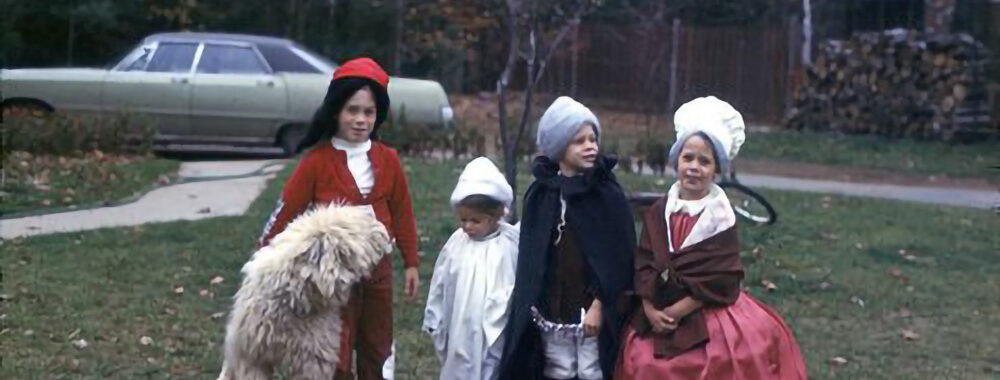
I remember when this country turned a spry 200. I was young enough that my mother had to explain what “bicentennial” meant. I marched in the parade in the Martha Washington costume she had sewn. Yes, that is me with my brothers and sister as we prepare to decamp, as they say.

The country was celebrating with the kind of communal joy that feels almost quaint now, with school pageants, town parades, and neighborhood events. 

Now, as our Nation approaches its 250th birthday, I’ve been thinking about what this anniversary means to me personally. My roots in this country go back to the Revolutionary War. My grandmother was a member of the Daughters of the American Revolution. The DAR, as it’s known, is a lineage society: to be eligible, you have to prove direct descent from an ancestor who served the patriot cause during the Revolution.

And yet my children are first-generation Americans. Children of an immigrant. They are, in a very literal sense, the embodiment of what it means to be American. They carry both deep roots and new ones. The oldest ambitions of this country and the ongoing hope that we can be better.

This nation was built on conflict and compromise. Dreamed into being by men who wrote beautifully about liberty while enslaving other human beings. It was forged through a revolution fought on ideals that took generations — and counting — to extend to everyone. The aspiration was real. So was the failure to fully live up to it.

Being an American means enjoying the rights and freedoms enshrined in the Constitution. Being a patriot means doing the hard work of civic engagement.

Rights without responsibility are just privilege. The freedoms we inherit — of speech, of assembly, of participation in our own governance — carry with them an obligation to use them. To vote. To show up at a town hall. To know your neighbors and your neighborhood. That is what separates a citizen from a bystander. 

So yes, celebrate. The birthday is real and worth marking.

But real patriotism is more than carrying the flag. It means carrying the torch. The most American thing you can do right now is stay engaged and doing the work of making this a more perfect union — not because it’s perfect, but because it can be more so. That is the American experiment. It always has been. 

Happy 250th, America. 

Incentive or Giveaway? What Yorktown’s Tax Exemption Review Must Answer

The Town Board has finally assembled a committee to review Yorktown’s commercial development tax exemption. The law exempts the increased value of commercial property from taxation, starting at 50% and declining over 10 years. Residents have been asking for this review for years, wanting to know whether the exemption is a tax giveaway or a genuine driver of economic growth.

At the June 2 Town Board meeting, members discussed what criteria the review should include. The conversation got heated fast. Accusations of “preconceived notions” flew across the dais, and the preconceived notions themselves were on full display, on both sides.

Councilman Esposito opened by saying he wants “subjective measures” included in the review, citing “excitement in town” as an example. When pressed, he pointed to revenue, traffic drawn into town, and business generated with other establishments. Councilman Gilbert was right to push back: none of those measures is actually subjective. They may be difficult to quantify, especially before-and-after comparisons, but they are measurable.

Here’s one simple approach: station volunteers in front of stores that received the exemption, like those at Yorktown Green, and ask shoppers whether they visited any other businesses during the same trip. Not scientific, but enough to generate meaningful anecdotal evidence about whether these stores drive foot traffic and boost the broader local economy. As a bonus, it might also point us toward strategies for strengthening local business overall.

Supervisor Lachterman suggested tracking infrastructure improvements paid for by these businesses, calling the total “a lot.” That remains to be seen.

The core question is straightforward: Does the tax exemption generate more revenue than it costs? To answer it honestly, we need the data outlined above. But the most important question may be harder to answer: Would these businesses have come to Yorktown without the exemption?

To get at that, we should look at comparable communities, with and without the exemption, and examine how commercial development compared. Not a perfect methodology, but actionable enough to inform a real decision about whether this policy benefits Yorktown’s bottom line, or whether it’s simply a giveaway.

We all have preconceived notions. The question is whether we’re willing to challenge them.